

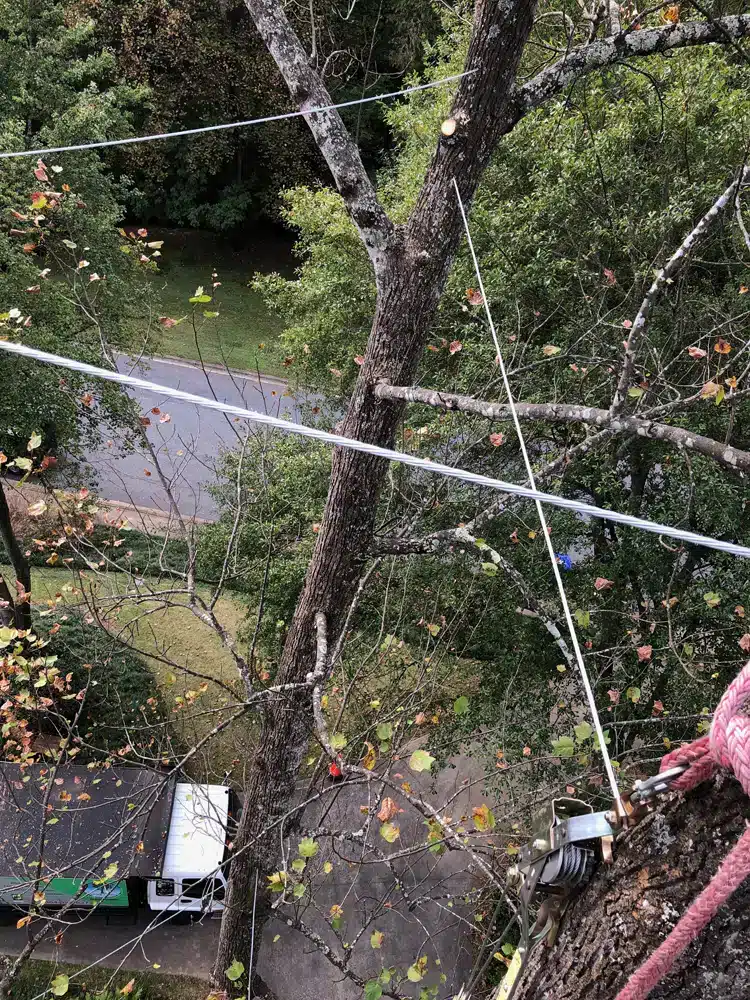
Tree cabling and bracing is an effective way to reduce the risk of tree failure while preserving mature trees that add value, shade, and character to a property. When trees develop weak branch unions, multiple stems, or structural imbalances, they become more vulnerable during high winds, heavy rain, or snow. Rather than removing a tree prematurely, cabling and bracing provides added support that helps stabilize these vulnerable areas.
The Canopy Climber offers tree cabling and bracing solutions designed to strengthen compromised trees and improve safety for surrounding homes, structures, and landscapes.
Understanding Tree Cabling and Bracing
Tree cabling and bracing involves installing supplemental support systems within a tree to reduce stress on weak or damaged areas. These systems are designed to work with the tree’s natural movement rather than restrict it entirely.
Cabling typically uses extra-high-strength steel cables installed in the upper crown of the tree. These cables limit excessive branch movement, reducing the likelihood of failure during storms.
Bracing, on the other hand, uses threaded steel rods installed through weak branch unions or multiple stems. These rods provide rigid internal support against twisting forces that can occur in severe weather.
When Tree Cabling and Bracing Is Needed
Tree cabling and bracing is often recommended when a tree shows signs of structural weakness but is otherwise healthy. Certain growth patterns naturally increase the risk of failure over time.
Common situations where cabling and bracing may be beneficial include:
Trees with multiple trunks or co-dominant stems
Large limbs with weak attachment points
Cracks forming at branch unions
Trees exposed to frequent high winds
Mature trees growing near homes or walkways
Addressing these issues early helps prevent sudden breakage and property damage.
How Tree Cabling Reduces Risk
Tree cabling works by limiting how far branches can move during high winds. While trees need some flexibility, excessive movement increases stress at weak points.
Tree cabling and bracing systems are installed high in the canopy to help redistribute forces during storms. By controlling movement, cables reduce strain on branch unions and help prevent splitting or breakage.
Properly installed tree cabling allows the tree to continue growing while benefiting from added support.
How Tree Bracing Adds Stability
Bracing rods provide internal reinforcement where branches or stems meet. These areas, known as unions, can be particularly vulnerable to twisting forces.
Tree cabling and bracing often includes bracing rods when:
A tree has included bark at a union
Two or more stems are competing for dominance
Visible cracks or separation are present
Bracing rods help hold these sections together, reducing the chance of failure during violent weather events.
The Role of Professional Assessment
Tree cabling and bracing should always begin with a professional evaluation. Not every tree is a good candidate, and improper installation can do more harm than good.
A professional assessment evaluates:
Tree species and growth habits
Overall health and vigor
Location and severity of structural weaknesses
Potential targets such as buildings or pathways
This evaluation determines whether tree cabling and bracing is appropriate or if other tree care solutions are needed.
Long-Term Benefits of Tree Cabling and Bracing
When installed correctly, cabling and bracing can extend the life of a tree while reducing safety concerns. These systems allow property owners to preserve valuable trees instead of resorting to removal.
Benefits include:
Reduced risk of limb or trunk failure
Improved safety during storms
Preservation of mature trees
Protection for nearby structures
Enhanced long-term tree stability
Tree cabling and bracing is often part of a broader tree care strategy that includes pruning and ongoing monitoring.
Ongoing Monitoring and Maintenance
Tree cabling and bracing systems are not a one-time solution. Trees grow and change, and support systems must be monitored to remain effective.
Regular inspections ensure:
Cables remain properly tensioned
Bracing rods continue to provide support
New growth does not interfere with the system
Structural changes are addressed promptly
Periodic adjustments help maintain the effectiveness of tree cabling and bracing over time.
Why Professional Installation Matters
Installing tree cabling and bracing requires specialized training and equipment. Incorrect placement, improper materials, or poor technique can compromise tree health and safety.
Professional installation ensures:
Correct cable placement in the canopy
Proper rod alignment through weak unions
Use of industry-approved materials
Compliance with accepted arboricultural standards
This attention to detail is essential for long-term success.
Tree Cabling and Bracing vs Tree Removal
In many cases, tree cabling and bracing offers a safer and more cost-effective alternative to removal. Instead of losing a healthy tree, property owners can stabilize it and reduce risk.
Tree cabling and bracing allows trees to continue providing shade, beauty, and environmental benefits while improving safety.
Schedule Tree Cabling and Bracing Today
If you have a tree with weak branches or multiple stems, waiting can increase the risk of failure. Tree cabling and bracing is most effective when installed before damage occurs.
Contact The Canopy Climber today to schedule an evaluation and learn whether tree cabling and bracing is the right solution for your property. Protect your trees, your home, and your peace of mind with professional support designed to last.
